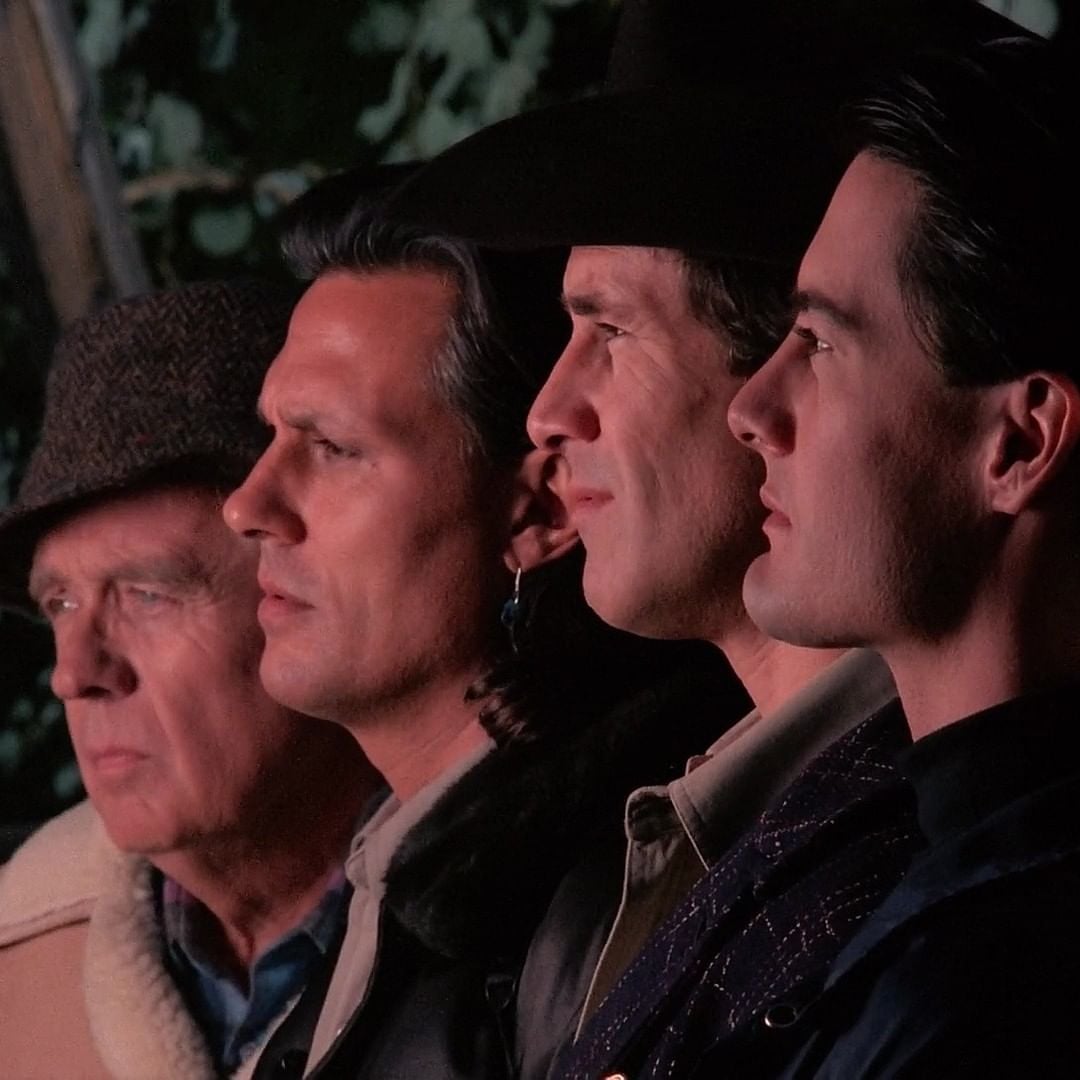
Here are a few words about a series that defined “weird TV” at the end of the last century but now has been so deeply absorbed it’s now firmly part of the vast wasteland of The Streaming Era.
Now that I live in a TV-world that is post-Heisenberg, that is to say, after ‘Breaking Bad‘ and ‘Better Call Saul‘, my expectations have been raised a couple of notches. Those shows had incredible acting and writing, an amazing look because each episode was shot on film, and, in spite of quite a few different directors / writers, stayed on track more that any other series I’m aware of. It wasn’t the traditional serial experience, with the storyline prone to wander and additional cast brought in when plot lines ran dry, everything in stasis with a constant production line of weak and tired tropes being pulled out of the writers’ asses, delivering the comfortable sameness show after show to keep the advertisers happy and the audiences placid. Instead, those series were like multi-day movies that delivered every episode, in a well-woven tale that could be described as epic. The comfort of the home viewing setting proved to be an important difference in audience viewing habits.
I was put in mind of these things by having an old-school cinema experience by watching all thirty-three hours of this weekly ABC drama in one fell swoop, courtesy of a local moviehouse, starting on one afternoon, going all night, napping a little before dawn, eating catered doughnuts, and finishing the remainder of the twenty-nine or so episodes.
Like ‘Breaking Bad‘, ‘Twin Peaks‘ success hinged on two things: plot and lead actor. The plot in this case is pure David Lynch, a heady swirl of loving ’50’s pastiches, ultra-banal soap opera-isms (including a soap opera within a soap opera conceit), eccentric behavior everywhere, and some truly disturbing moments. Concerning the last: like those sudden and surprising bursts of brutality that occur in some Australian films (for example, almost anything scripted by Nick Cave or Nash Edgerton), and work completely in context, there are sudden segues into the eerie and creepy that will erase the smile from your face that watching something like one of Piper Laurie’s incredibly over-the-top hysterics or the exchange of some witty banter between Agent Cooper and Deputy Andy had just put there.
The fact that the overall atmosphere is more inviting than scary, filled with humor and a charming sort of weirdness, and the darker moments work so strongly, is a credit to the overall vision of the series. I would opine that this series captured Lynch’s tendency to have the dark side of life barely hidden beneath the All American facade better than any of his other works, and the themes in ‘Blue Velvet‘ find fuller fruit here. Twin Peaks might not have the insanely sunny surface of Lumberton, but it maps the inside of David Lynch’s head in greater detail (I couldn’t help but notice what seems to be the auteur’s affection for double entendre. If Lumberton seemed like a macho and phallic name, then Twin Peaks seems suggestively feminine. And don’t forget about all that cherry pie).

Watching Kyle MacLachlan as FBI agent Dale Cooper was one of the joys of this weekend for me. His enthusiasm and cheerfulness won me over immediately. He is a character you can embrace, even though he is a private person. It’s those scenes where he has to be serious and focused, or compassionate with a touch of sadness in his eyes, that his skill is best displayed. The distance he keeps his personal life from his work gradually narrows as the shows went on and this allows us to form a significant attachment to his story, and bolsters up the already strong character arc. When he related the tale of the tragic death of his first and only true love, it was a deeply moving moment. He deserves nothing but props for realizing this character so fully, without which the show would never reached the amazing heights it did.
Agent Cooper’s personality is also rife with idiosyncrasies and this he has in common with every resident of this quaint Northwestern town (in fact, Twin Peaks is a place Stephen King could have described, had he been born on the other coast). Though top-heavy with cast members, the show never crosses the line with too many. You never need a playbook and, over time, the characterizations uniformly deepen. This is due, I believe, to the excellent casting, and is a value that only grows on repeated viewings. So rare! What a wonder David Lynch was!
Leave a Reply
You must be logged in to post a comment.